TMA NGOPI Discusses React Native and AI-Assisted Development, Building a Relaxed Yet Productive Learning Culture
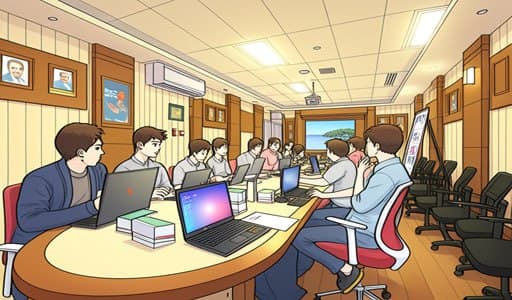
On May 8, 2026, TMA once again held its internal event titled NGOPI (Ngobrol Pintar IT / Smart IT Talks), a discussion and knowledge-sharing forum that has become part of the company’s learning culture. More than just a technical sharing session, NGOPI has evolved into an open communication space where ideas, experiences, and technology exploration come together in a relaxed yet highly valuable atmosphere.
This session was conducted in a hybrid format, both online through Discord and offline at the TMA Bandung office. This hybrid approach allowed team members working remotely as well as onsite employees to participate without geographical limitations. From the very beginning, the event felt lively, with active interaction between online and offline participants.
The main topic of this NGOPI session was presented by Varyl and Ibnu, who discussed Tips and Tricks for Mobile App Development using React Native. The material focused not only on conventional mobile application development, but also on how AI is transforming the way developers build applications faster, more flexibly, and more efficiently.
In his presentation, Varyl explained how mobile app development workflows are currently undergoing major transformation. Previously, developers relied heavily on manual workflows from design to debugging. Today, AI-assisted development has begun to accelerate the entire process significantly. The workshop material illustrated the transformation from:
Figma → Manual Coding → Manual Debugging → Finished
to:
Figma → Screenshot-to-Code Conversion → AI Reads Folder Structure → AI-Assisted Testing
This discussion attracted significant attention because it demonstrated how AI is evolving into a developer’s collaborative partner rather than simply being an additional tool. Many participants were enthusiastic when Varyl demonstrated how AI could help understand project structures, generate code automatically, and assist in testing applications more efficiently.
In addition to discussing modern workflows, the session also explored various AI-powered code editors currently popular for mobile and web development. The workshop covered tools such as Antigravity (Replit), Cursor (Anysphere), and TRAE (ByteDance).
Ibnu explained that each platform has its own strengths and characteristics. Cursor is known for being highly capable in web development but requires detailed prompts, while TRAE is considered more flexible and capable of understanding simpler prompts more naturally. Interestingly, TRAE was also considered highly suitable for React Native mobile app development because it can generate more dynamic designs and integrate directly with Figma or image references.
The discussion became even more engaging when the session moved into the implementation phase of React Native using AI-assisted coding approaches. Participants were shown how the initial setup process could be completed much faster using English prompts to achieve more optimal AI-generated results.
The session was not limited to theory. It also included a live demo project using React Native, which made the event even more interactive. The demonstration showed how applications could be run through a web browser or Android Studio emulator with a relatively simple process. Many participants immediately tried the demonstrated steps while continuing discussions in the dedicated Discord channels created for the workshop.
One of the most interesting parts of the session was when Varyl introduced the concept of “Give TRAE Freedom,” which encourages developers to allow AI to improvise designs and development processes based on prompts provided by the user. This concept opened a new perspective that AI is not merely a coding assistant, but can also become a creative partner in application development.
Another interesting topic discussed was how TRAE could assist developers in updating application interfaces simply by providing reference images and a few additional prompts. This demonstrated how AI technology is rapidly transforming UI/UX development into a much faster and more adaptive process.
Despite the highly technical material, the atmosphere remained relaxed and enjoyable throughout the event. Many lighthearted jokes and spontaneous comments emerged from both participants and speakers, yet they remained insightful and relevant. These spontaneous moments helped keep the discussion dynamic and engaging. The “serious but relaxed” culture that TMA has cultivated was strongly reflected throughout this NGOPI session.
Beyond being a learning platform for technology, NGOPI also plays an important role in building a healthy communication culture within the company. With its open discussion format, participants felt comfortable expressing opinions, asking questions, and sharing experiences. There were no rigid formal barriers between senior and junior engineers, allowing the learning process to flow naturally and collaboratively.
The use of Discord as the primary platform also reflects TMA’s commitment to adopting modern collaboration tools. In addition to meetings and discussions, Discord has evolved into a daily collaboration platform complementing other communication channels such as Telegram and WhatsApp. Through features such as voice channels, screen sharing, and topic-based discussions, Discord enables flexible and real-time technical communication.
This NGOPI session also demonstrated how TMA continuously encourages its internal teams to adapt to the latest technological developments, particularly in AI and software engineering. The combination of React Native and AI-assisted development was viewed as one of the most relevant directions for the future of mobile application development.
At the end of the event, many participants expressed strong interest in exploring AI integration within their daily development workflows. Several attendees also began envisioning how tools like TRAE and other AI coding assistants could be integrated into the development of TMA’s future internal products.
Through NGOPI, TMA once again proved that learning technology does not always need to happen in formal or rigid environments. With a more open, relaxed, and collaborative approach, knowledge transfer becomes far more effective and enjoyable.
NGOPI is not merely a technical discussion forum—it has become a symbol of a company culture that continues to grow alongside technology, communication, and an endless passion for learning.