TMA Participates in Telkom University Computing Project Exhibition 2026: Strengthening Industry–Academia Collaboration to Foster Digital Innovation
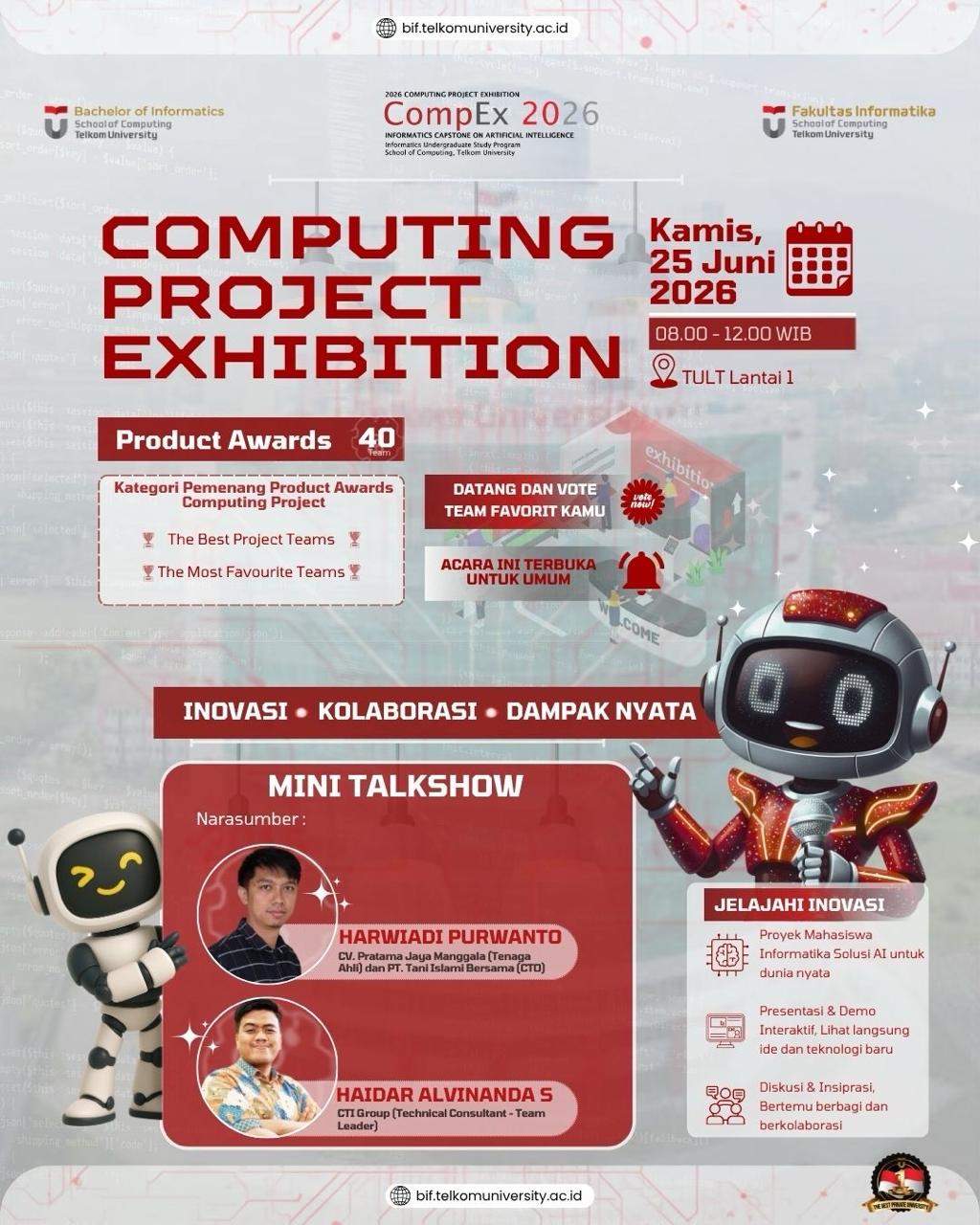
On Thursday, June 25, 2026, PT Tech Mayantara Asia (TMA) reaffirmed its commitment to supporting Indonesia's digital talent development by participating in the Computing Project Exhibition 2026, organized by the Faculty of Informatics at Telkom University. Held from 08:00 AM to 12:00 PM on the first floor of the Faculty of Informatics building, the event served as both a technology showcase and a competition featuring the best student projects developed throughout the academic semester.
The Computing Project Exhibition is one of Telkom University's flagship annual academic events, bringing together academia and industry through a collaborative platform where students present innovative digital solutions. This year's exhibition featured 40 project teams, each demonstrating their products before lecturers, industry practitioners, mentors, and judging panels. Every team participated in live demonstrations, technical discussions, and product evaluations, providing valuable opportunities to receive comprehensive feedback from both academic and industrial perspectives.
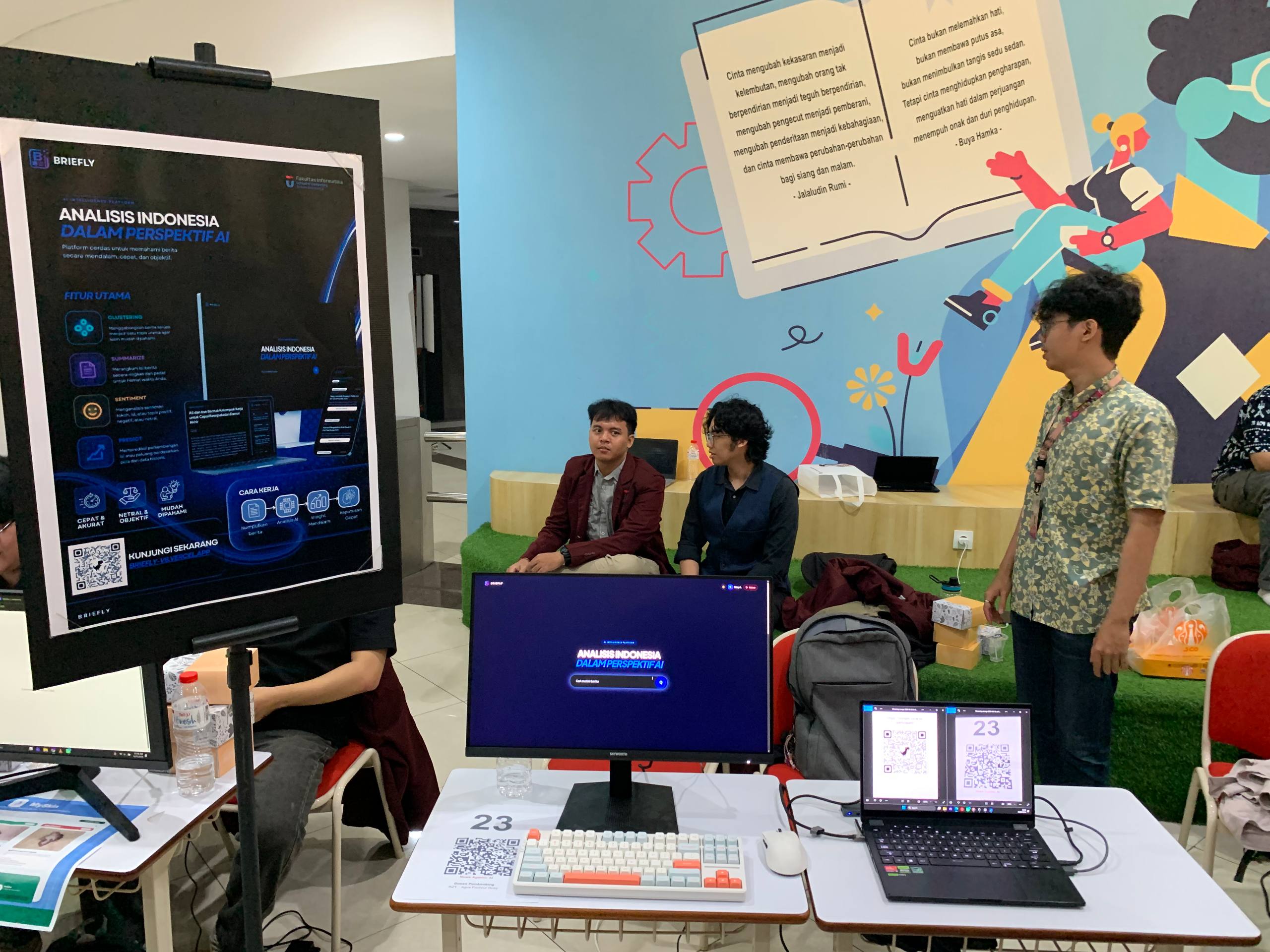
For TMA, attending the exhibition was more than simply accepting an invitation from the university. It represented the company's ongoing commitment to building a sustainable innovation ecosystem that bridges higher education and the technology industry. Over the past several months, TMA has actively mentored one of the participating teams responsible for developing Briefly, an Artificial Intelligence-powered platform designed to analyze digital news, generate automatic summaries, perform sentiment analysis, and predict the potential impact of news across various industries.
Throughout the mentoring program, TMA provided guidance on multiple aspects of product development, including system architecture, product strategy, user requirement validation, software engineering practices, and practical implementation approaches aligned with real industry needs. This mentoring initiative aimed to help students bridge the gap between academic knowledge and the practical challenges they will encounter in their professional careers.
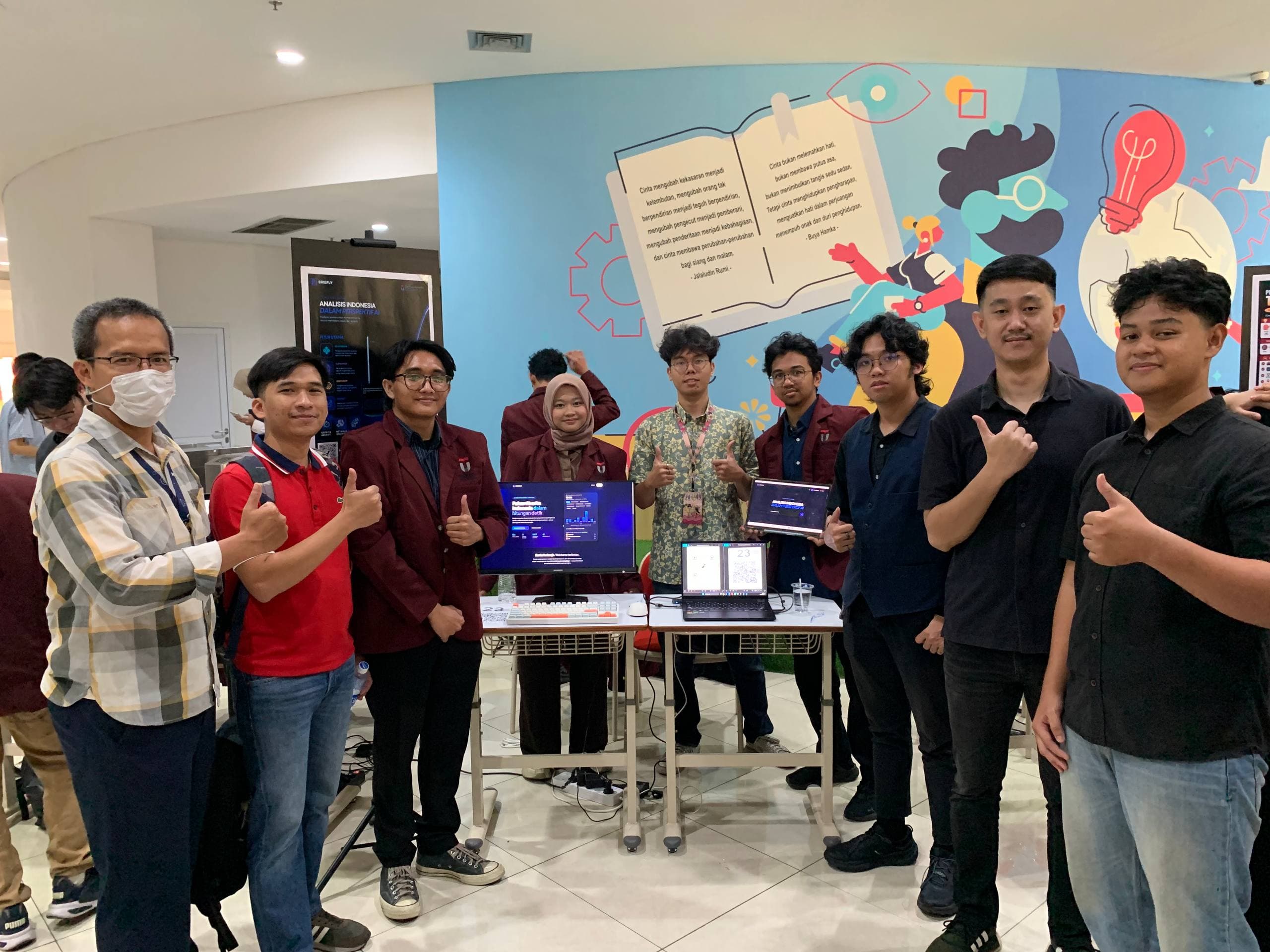
Representing TMA at the event were three members of the company's engineering and product development team: Salman Artadi, Randy Rahman, and Faisal Tahir. All three have actively contributed to mentoring university students while simultaneously participating in the development of TMA's own technology products. Their presence symbolized TMA's role not only as an industry partner but also as a mentor committed to nurturing the next generation of digital innovators.
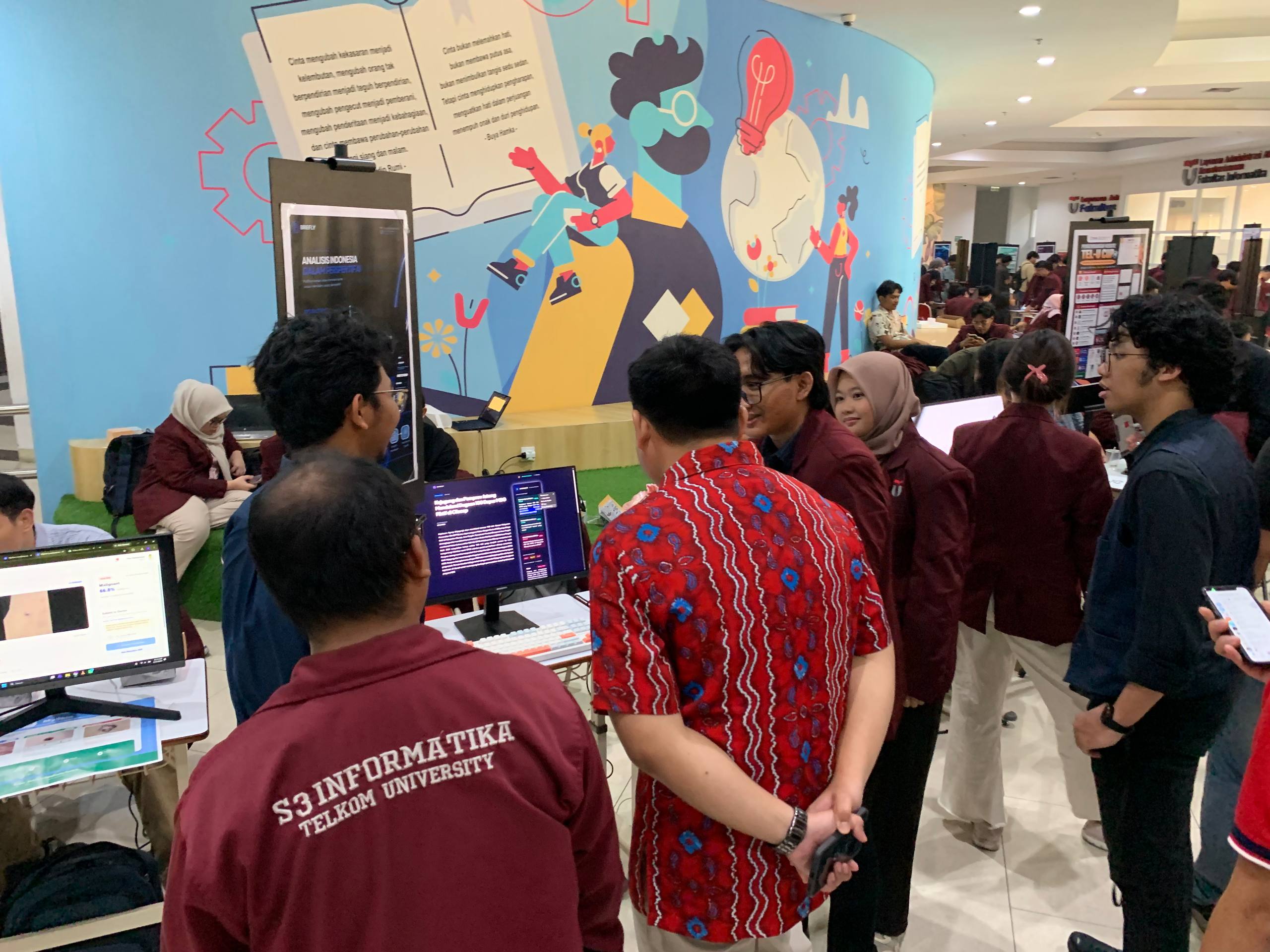
The TMA delegation received an enthusiastic welcome from participating students. Throughout the exhibition, they visited numerous project booths to observe demonstrations and engage directly with student teams. Beyond expressing appreciation for the impressive work on display, the mentors also held in-depth discussions covering software architecture, user experience, Artificial Intelligence implementation, deployment strategies, scalability, and opportunities for transforming academic prototypes into market-ready solutions.
Among the showcased projects, Briefly attracted particular attention due to TMA's involvement during its development. The platform addresses the growing challenge of information overload by leveraging Artificial Intelligence to aggregate news from multiple sources, organize content into meaningful topics, perform sentiment analysis, generate concise summaries, and identify potential impacts across specific industries. The project demonstrated how students successfully integrated modern technologies—including Natural Language Processing (NLP), Large Language Models (LLMs), machine learning, and contemporary web engineering—into a solution with genuine practical value.
According to TMA's mentoring team, one of Briefly's greatest strengths lies in its balanced approach between engineering excellence and user-centric thinking. Rather than focusing solely on implementing advanced technologies, the students invested significant effort in understanding real user needs and designing a product capable of helping analysts, researchers, journalists, and decision-makers access reliable information more efficiently.
However, TMA's attention was by no means limited to a single project. During the exhibition, the team explored many other student innovations that reflected the remarkable creativity and technical capabilities of Telkom University students. The projects addressed a wide range of domains, including education, healthcare, business applications, cybersecurity, smart services, and various Artificial Intelligence-powered solutions designed to solve real societal challenges.
From TMA's perspective, events such as the Computing Project Exhibition hold significant strategic value. Technology evolves at an extraordinary pace, making it impossible for industry to advance without meaningful collaboration with academia. Likewise, universities benefit greatly from continuous input from industry practitioners to ensure that their curricula remain relevant to the rapidly changing needs of the professional world. This partnership ultimately produces graduates who are not only academically competent but also well-prepared to contribute from the very first day of their professional careers.
Consistent with its corporate philosophy, TMA believes that learning should never end with graduation. The company embraces the concept of being a lifelong learning organization, encouraging continuous growth both internally and through long-term collaboration with educational institutions. Student mentoring, internship programs, industrial placements, collaborative research, and knowledge-sharing initiatives all form part of this broader commitment.
The participation of Salman Artadi, Randy Rahman, and Faisal Tahir also reflects TMA's broader vision of engineering excellence. At TMA, engineers are not merely technology developers; they are mentors, facilitators, and contributors to the growth of Indonesia's future technology leaders. By sharing practical experiences from real-world projects, they provide students with valuable insights that extend beyond textbooks and classroom theory.
The exhibition also opened new opportunities for future collaboration between TMA and Telkom University. Conversations throughout the event highlighted numerous possibilities for applied research, joint product development, innovation incubation, internship programs, and long-term strategic partnerships that could continue benefiting both academia and industry.
Witnessing the enthusiasm of the students and the high quality of their projects, TMA remains optimistic about Indonesia's future digital workforce. The country possesses extraordinary young talent with the creativity and technical ability to drive the nation's digital transformation. What these talents need is an environment that encourages collaboration, opportunities to experiment, and mentorship from experienced professionals who can help transform promising ideas into impactful solutions.
TMA's participation in the Computing Project Exhibition 2026 demonstrates that collaboration between universities and industry is far more than a symbolic partnership—it is a long-term investment in building Indonesia's technology ecosystem. When academic institutions contribute fresh ideas and cutting-edge research while industry provides practical implementation experience, the result is innovation that is not only technically sophisticated but also highly relevant to real-world market demands.
Looking ahead, TMA hopes to further strengthen its relationship with Telkom University through ongoing collaboration in education, research, innovation, and talent development. Together, academia and industry can create a more practical learning environment, accelerate the development of highly skilled digital professionals, and deliver technology solutions that generate meaningful value for businesses, government institutions, and society as a whole.