TeMA Data Flow : The Advantages of Combining Apache Airflow and Apache NiFi in a Unified Data Platform
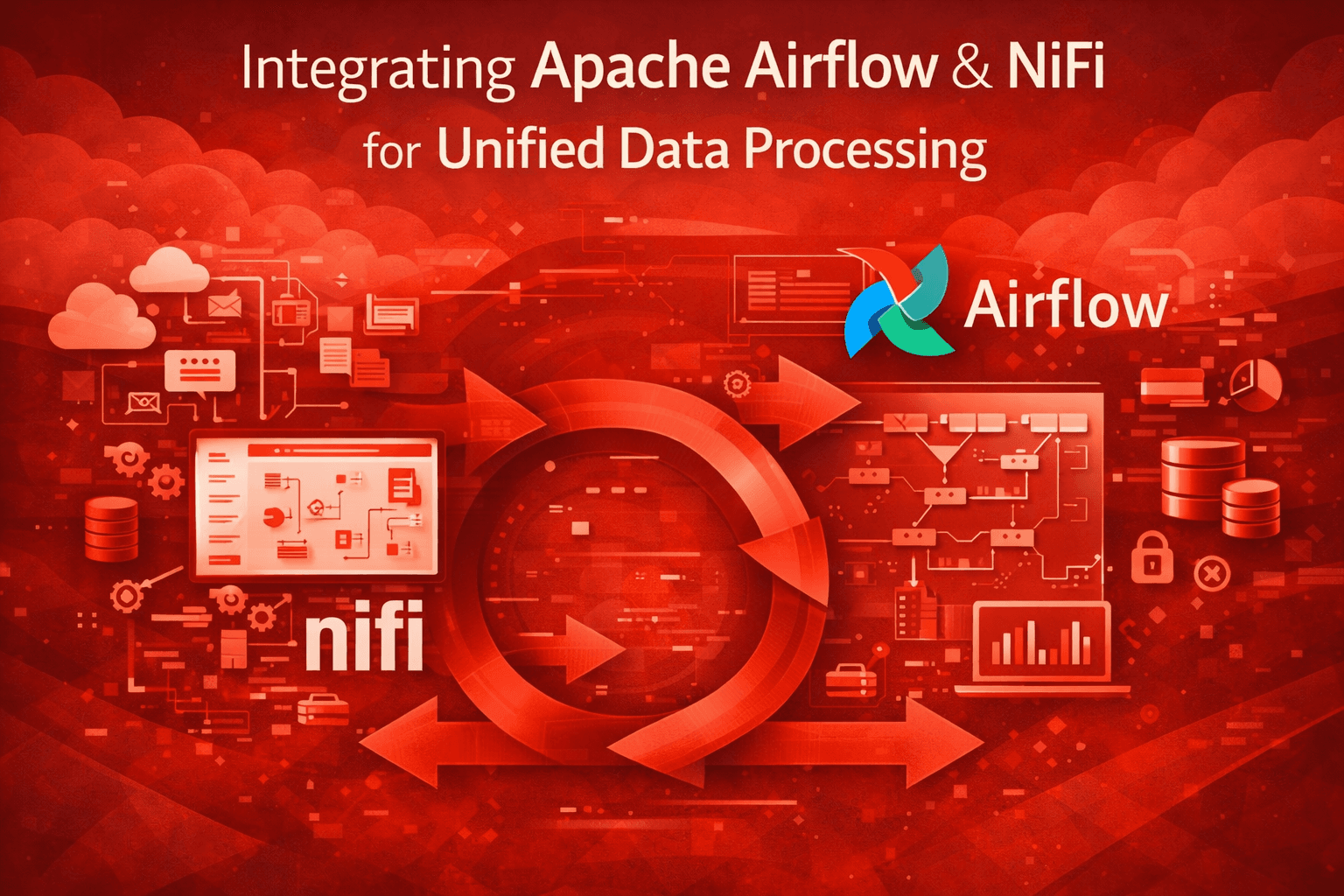
In today’s data-driven era, organizations face significant challenges in managing complex, diverse, and continuously evolving data flows. From data ingestion and transformation to pipeline orchestration, each stage requires a structured and scalable approach. Two technologies that are widely used in this context are Apache Airflow and Apache NiFi. Each has its own strengths, and when combined into a single platform, they can create a highly powerful and flexible data solution.
Apache NiFi is well known for its strength in managing real-time data flows. With its intuitive drag-and-drop visual interface, NiFi enables users to build data pipelines with minimal coding. It excels at ingesting data from a wide range of sources, including databases, APIs, file systems, and streaming platforms. In addition, NiFi provides built-in capabilities for data routing, transformation, and prioritization, making it ideal for handling data in the early stages of processing.
One of NiFi’s key advantages is its ability to handle dynamic data flows. Each data stream can be monitored in real time, providing full visibility into status, throughput, and potential errors. Features such as back-pressure and queue management ensure system stability even during data surges. Moreover, NiFi includes robust security features such as encryption, authentication, and audit trails, which are essential for managing sensitive data.
On the other hand, Apache Airflow serves as a powerful workflow orchestration platform. Airflow allows developers to define data pipelines as code using Python, structured as Directed Acyclic Graphs (DAGs). This approach makes it easier to manage complex workflows by clearly defining task dependencies and execution order.
Airflow’s main strength lies in its ability to schedule and manage batch processes and multi-step data pipelines. It is particularly well-suited for ETL processes, data warehouse loading, and integration with analytics systems. With built-in monitoring and retry mechanisms, Airflow ensures that workflows run reliably and can recover gracefully from failures.
When Apache NiFi and Apache Airflow are combined into a single platform, they complement each other effectively. NiFi can serve as the ingestion and real-time data processing layer, while Airflow acts as the orchestrator that manages the overall workflow. This combination enables organizations to build end-to-end data pipelines that support both real-time processing and batch orchestration.
For example, NiFi can be used to ingest data from multiple sources in real time, perform initial filtering and transformation, and then send the processed data to a data lake or messaging system such as Kafka. Airflow can then take over by scheduling downstream processes such as advanced transformations, aggregations, and loading data into a data warehouse. This clear separation of responsibilities ensures that each component operates efficiently within its domain.
This architecture also provides high flexibility in development and maintenance. Since NiFi and Airflow operate in different layers, changes in one layer do not necessarily impact the other, as long as data contracts are maintained. For instance, modifications in data ingestion logic within NiFi do not require changes in Airflow orchestration. This is particularly beneficial in large-scale systems that evolve over time.
From a scalability perspective, the combination of Airflow and NiFi offers significant advantages. NiFi can be horizontally scaled to handle large volumes of data streams, while Airflow can manage thousands of workflows in parallel. With the right architecture, this platform can support complex enterprise data needs efficiently.
Integration between the two systems can be enhanced through APIs and event-driven architectures. Airflow can trigger NiFi processes via REST APIs, or NiFi can send signals to Airflow upon completion of certain tasks. This enables the creation of a highly responsive and automated system.
Security and governance are also strengthened through this combination. NiFi provides strong control over data flows, including encryption and audit trails, while Airflow manages workflow execution and user access control. Together, they form a secure and compliant data platform that aligns with regulatory requirements.
In modern implementations, the combination of Airflow and NiFi integrates seamlessly with technologies such as data lakes, data warehouses, and analytics platforms. Both tools can operate in containerized and cloud-native environments, supporting flexible and scalable deployments.
Strategically, using Airflow and NiFi in a unified platform delivers significant value to organizations. It not only improves data management efficiency but also accelerates time-to-insight—the time required to transform raw data into valuable information. With structured and automated pipelines, organizations can make faster, data-driven decisions.
In conclusion, Apache Airflow and Apache NiFi are two complementary technologies within the modern data ecosystem. NiFi excels in real-time data flow management and ingestion, while Airflow specializes in workflow orchestration and scheduling. When combined, they create a robust, flexible, and scalable data platform. For organizations looking to build a strong data foundation and prepare for future challenges, this combination represents a highly strategic choice.