The Advantages of Frappe Framework for Modern Product Development and Its Implementation in TMA ERP Solutions
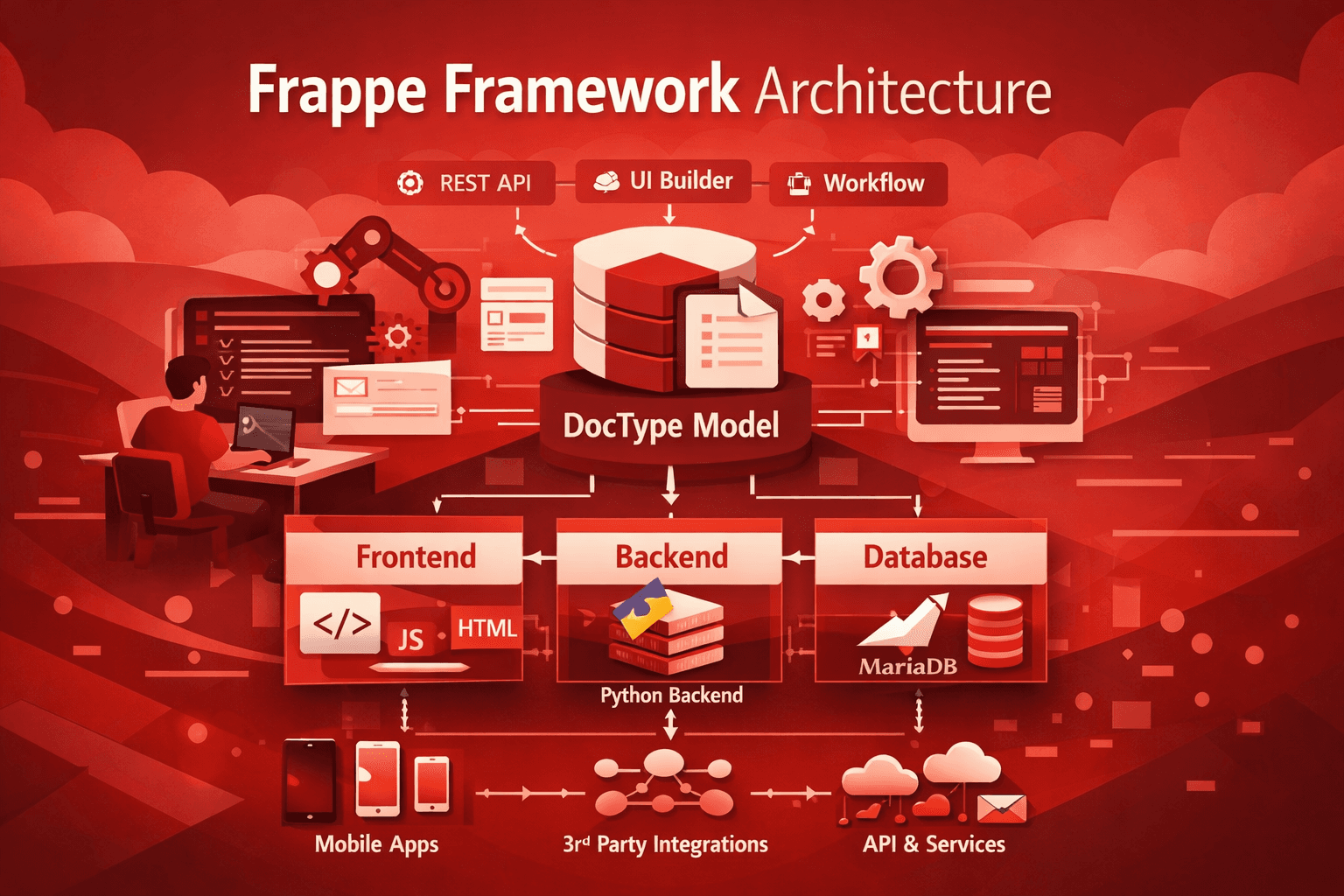
In today’s rapidly evolving digital transformation era, the need for a development framework that is flexible, efficient, and scalable has become increasingly critical. Organizations are racing to build digital products that are not only fast to develop but also capable of adapting to dynamic business changes. In this context, Frappe Framework emerges as a modern solution that offers an integrated approach to application development.
Frappe Framework is widely recognized as a full-stack framework that unifies essential components within a single ecosystem. Developers no longer need to combine multiple technologies to build backend systems, frontend interfaces, and APIs, as everything is available natively. This approach significantly reduces development complexity while accelerating implementation. With a consistent foundation, development teams can focus more on business logic and product innovation rather than dealing with fragmented technology stacks.
Another key advantage of Frappe lies in its use of Python as the core programming language. Python is known for its simplicity and power, making it easier for developers to write, read, and maintain code. This becomes particularly valuable for long-term product development, where maintainability is essential. Additionally, Python’s strength in data processing and its compatibility with artificial intelligence technologies open opportunities to build intelligent features within applications.
One of the most compelling aspects of Frappe is its model-driven approach through the DocType system. In Frappe, a DocType is not just a data structure definition; it automatically generates database tables, user interfaces, and API endpoints. This approach greatly enhances development efficiency, as many fundamental components of an application are created automatically. Developers are freed from writing repetitive CRUD operations, allowing them to focus on more strategic and value-driven tasks.
Frappe also provides a ready-to-use user interface out of the box. Features such as dashboards, form builders, and report builders are built-in, enabling applications to be deployed without the need to develop UI components from scratch. This significantly accelerates time-to-market while ensuring a consistent and professional user experience across the system.
From a security perspective, Frappe offers a highly flexible role and permission system. Access control can be configured down to the field and document level, ensuring that users only interact with data relevant to their roles. This level of control is crucial in business applications, particularly those dealing with sensitive information and critical operational processes.
Integration capabilities are another major strength of Frappe. Every DocType automatically comes with REST APIs, making it easy to connect applications with mobile platforms, modern frontend frameworks such as React or Vue, and third-party systems. This API-first approach aligns well with modern distributed architectures and enables seamless interoperability between systems.
Frappe is also designed with multi-tenancy support, allowing a single infrastructure to serve multiple organizations or users simultaneously. This is particularly beneficial for Software as a Service (SaaS) solutions, where efficiency and scalability are key considerations. With this capability, system management becomes more streamlined without compromising performance.
As an open-source framework, Frappe provides organizations with the freedom to customize and extend the system according to their needs. The absence of vendor lock-in ensures full control over the product, while an active community offers valuable resources such as documentation, discussions, and extensions that accelerate development and problem-solving.
These advantages make Frappe Framework a strong foundation for building modern ERP solutions. In this context, we at TMA leverage Frappe Framework as the core technology behind our ERP product. This approach enables us to deliver an ERP system that is not only comprehensive but also flexible and highly adaptable to the specific needs of each organization.
TMA’s ERP solution is designed to address a wide range of business challenges, from financial management and inventory control to operational process automation. By utilizing Frappe’s architecture, we are able to develop ERP modules rapidly without compromising quality. Each feature is seamlessly integrated, creating a unified ecosystem that enhances overall business efficiency.
Furthermore, Frappe’s high level of customization allows TMA’s ERP solution to adapt to various industries. We understand that every business has unique processes, and therefore, an ERP system cannot be one-size-fits-all. Through a flexible DocType structure and workflow configuration, we can tailor the system to meet specific client requirements without rebuilding it from scratch.
In implementation, we also take advantage of Frappe’s built-in automation and workflow engine to improve operational efficiency. Manual processes that once consumed significant time can now be automated, reducing errors and increasing productivity. This delivers substantial added value to organizations in their daily operations.
By combining the strengths of Frappe Framework with our expertise in developing business solutions, TMA ERP stands as a platform ready to support digital transformation initiatives. We believe that technology is not just about systems, but about how those systems can create tangible impact on business growth.
Overall, Frappe Framework offers a modern, efficient, and flexible approach to digital product development. When combined with the right implementation strategy, as demonstrated in TMA ERP, it becomes a powerful foundation for building innovative and sustainable solutions for the future.