Company
Work From Café: a relaxed discussion leads to new innovation and a strategic product direction
Besides location flexibility, TMA also uses a strong digital collaboration approach to support a distributed team. Day to day, the team uses communication platforms such as Discord as the main medium for real-time collaboration, which allows structured discussion through thematic channels. Platforms such as Telegram and WhatsApp are still used for quick communication and informal coordination. This combination creates a work ecosystem that is responsive, flexible, and well organized, even when the team is not always in one physical place.
24 April 2026
Notes from the work
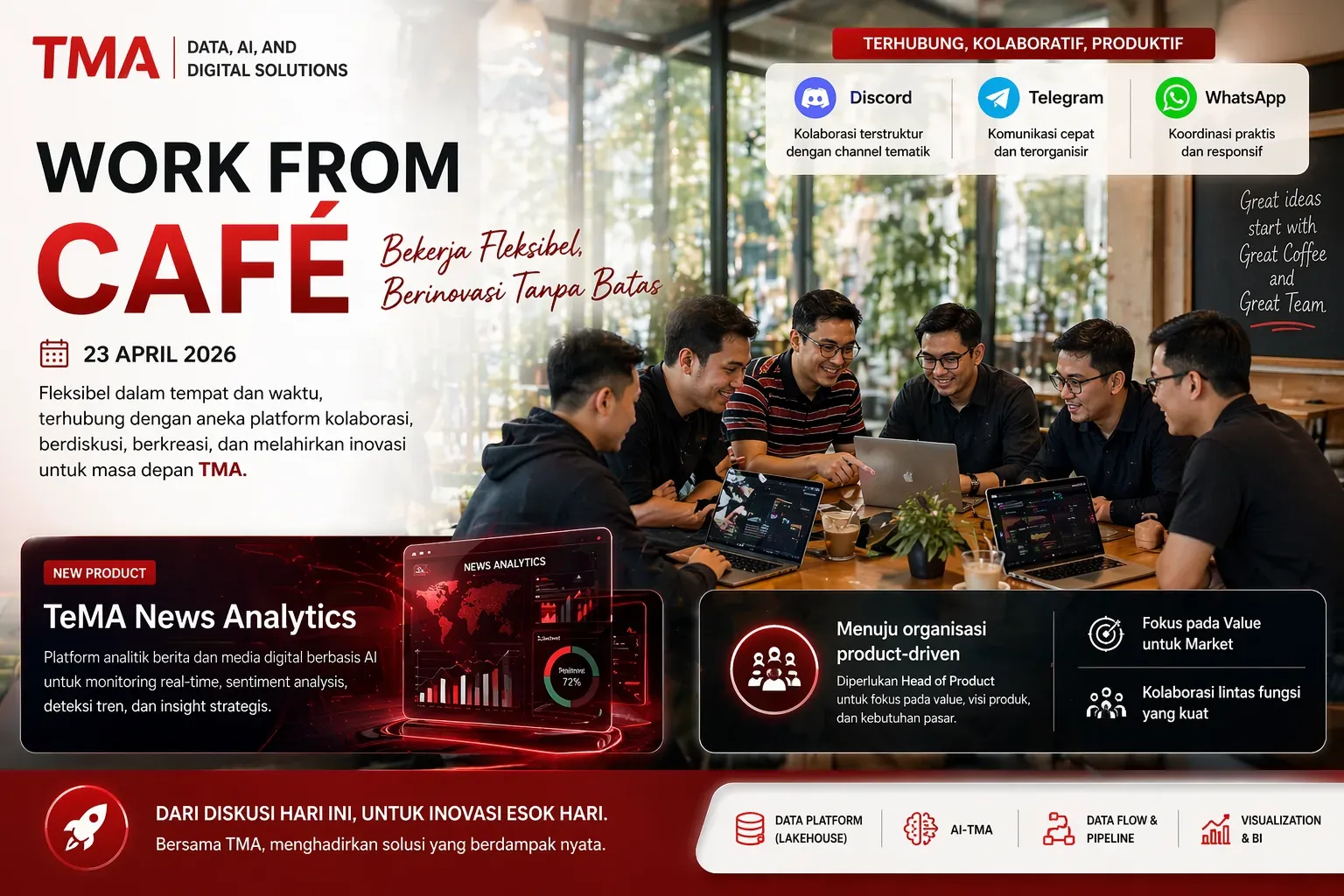
On 23 April 2026, the TMA team again showed the unique character of its work culture through Work From Café (WFC), an initiative that reflects high flexibility at work, both in place and in time. At a comfortable and inspiring café, the team gathered not only to work but also to discuss, collaborate, and produce new ideas that directly shape the company's product direction.
At TMA, flexibility is not just a policy. It is part of the organization's DNA. Work From Café is one clear form of the belief that productivity does not always have to be tied to a formal office. In a more relaxed, open, and human setting, fresh ideas come more easily. During this WFC session, teams from many functions, from engineering and data to strategy, mixed without walls. Discussion happened organically, less stiffly, and flowed better, creating a healthier collaboration space where everyone feels they contribute to the company's direction.
Besides location flexibility, TMA also uses a strong digital collaboration approach to support a distributed team. Day to day, the team uses communication platforms such as Discord as the main medium for real-time collaboration, which allows structured discussion through thematic channels. Platforms such as Telegram and WhatsApp are still used for quick communication and informal coordination. This combination creates a work ecosystem that is responsive, flexible, and well organized, even when the team is not always in one physical place.
The activity did not stop at ordinary work. In a relaxed but still productive mood, the team started talking more deeply about developing TMA products, especially how to use the power of data and AI more strategically. From that discussion came a new idea that grew into the product concept TeMA News Analytics. The product is designed as a data-based analytics platform that can monitor news and digital media in real time, analyze public sentiment toward issues, brands, and public figures, and detect trends and potential issues early. With these capabilities, TeMA News Analytics is expected to provide relevant and accurate insight to support strategic decision-making.
The discussion also reaffirmed TMA's main strength in integrating technologies. It ranges from a lakehouse-based data platform for large-scale data management and AI capability through AI-TMA for smart analysis to data pipelines and orchestration that keep data flowing well. Together with visualization and business intelligence capability, all these components form a solid ecosystem. TeMA News Analytics will be a real representation of that integration, turning raw data into high-value insight.
In the middle of the product talk, a strategic discussion about the organization structure also came up, especially in the context of product development. So far, product development at TMA has stayed fairly close to the technical function. This carries risk, especially in keeping focus on market needs. A product that is driven too much by a technical perspective can lose direction on value and relevance.
From that discussion, the team agreed that TMA needs a dedicated role focused on product development from the business and market side, a Head of Product. This role is expected to set product vision, build a roadmap that matches market needs, and bridge communication between the technical team and business needs. With a clear split between the product and engineering functions, each team can work better. The engineering team can focus on implementation quality, while the product function makes sure every feature and development has strong market value.
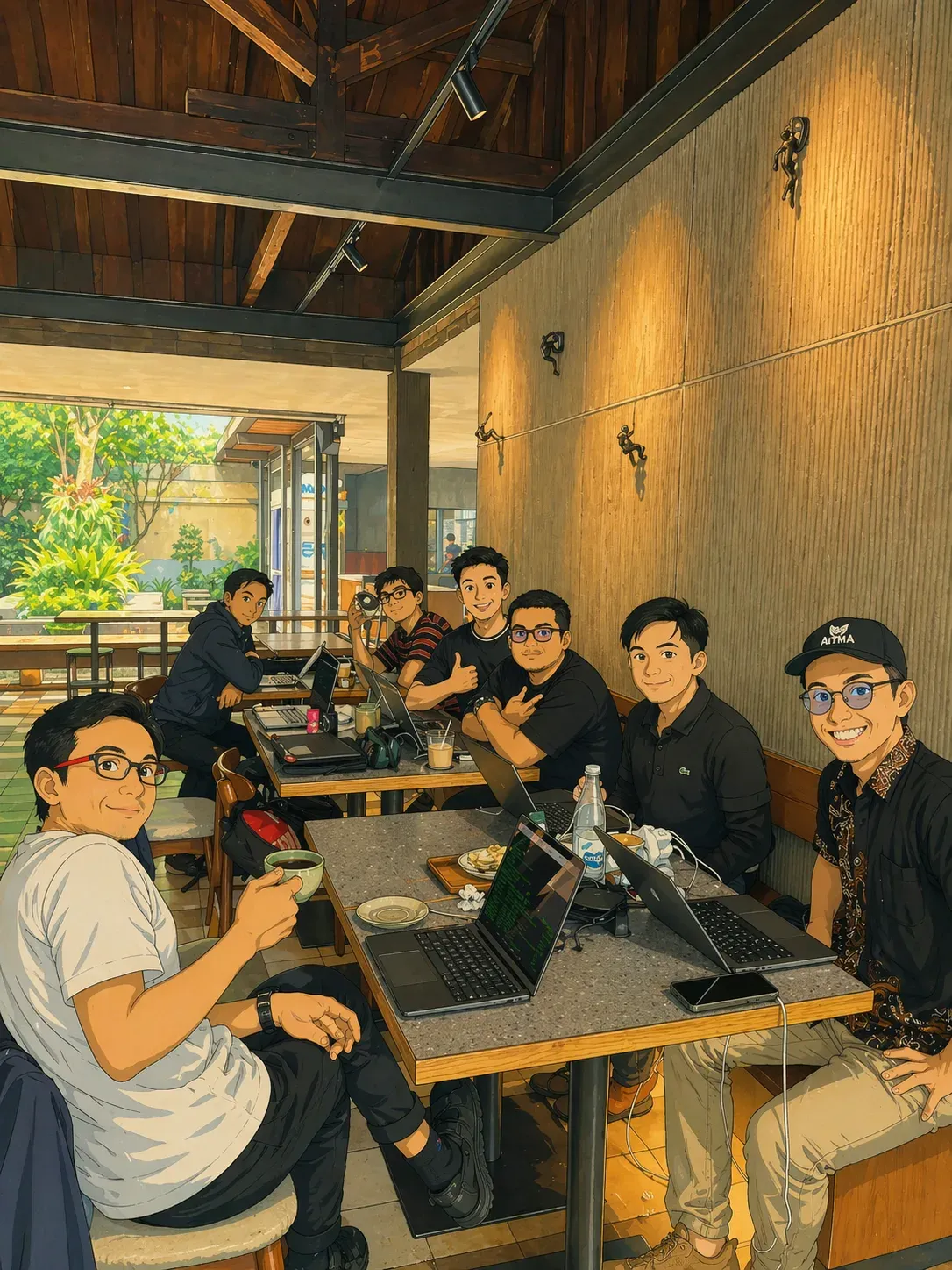
This discussion was an important step in TMA's journey toward a more product-driven organization. It means products are no longer built only because the technical capability exists, but because users have a real need. This approach will matter more as TMA's product portfolio grows, from TeMA Data Platform, AI-TMA, and TeMA ERP to TeMA News Analytics, which is still being designed.
What stood out about this Work From Café was how the informal setting actually encouraged more open and constructive discussion. There were no formal limits between roles, no communication walls, and every idea had room to be heard. This created a shared sense of ownership of the company's direction and the products being built.
Collaboration in this relaxed setting shows that innovation does not always come from formal meeting rooms. It can come from more natural interaction. With this approach, TMA builds products and also a work culture that is healthy, adaptive, and focused on growth.
Work From Café on 23 April 2026 showed that flexibility at work can go hand in hand with productivity and innovation. From a café came a new product idea, a strategic direction for the organization, and awareness of how important product leadership is for driving company growth.
With a spirit of collaboration, flexibility, and focus on value, TMA keeps moving toward the future as a product-based company that is strong, relevant, and competitive. From a simple room came a big step for a more strategic journey.