
Digital Engineering
Mojokerto regency government and TMA partner: TeMA Civic as the first foundation for IDSS development
Mojokerto, 15 September 2026 — Pemkab Mojokerto and Tech Mayantara Asia (TMA) again opened a space for strategic collaboration to drive digital transformation in regional government. In a meeting that lasted about one hour, officials of the Mojokerto regency government and the TMA team discussed the architecture design of the Intelligent Decision Support System (IDSS), aimed at helping the regional government manage data, monitor development performance, run analysis, and support more measurable decision-making.
15 September 2026
Notes from the work
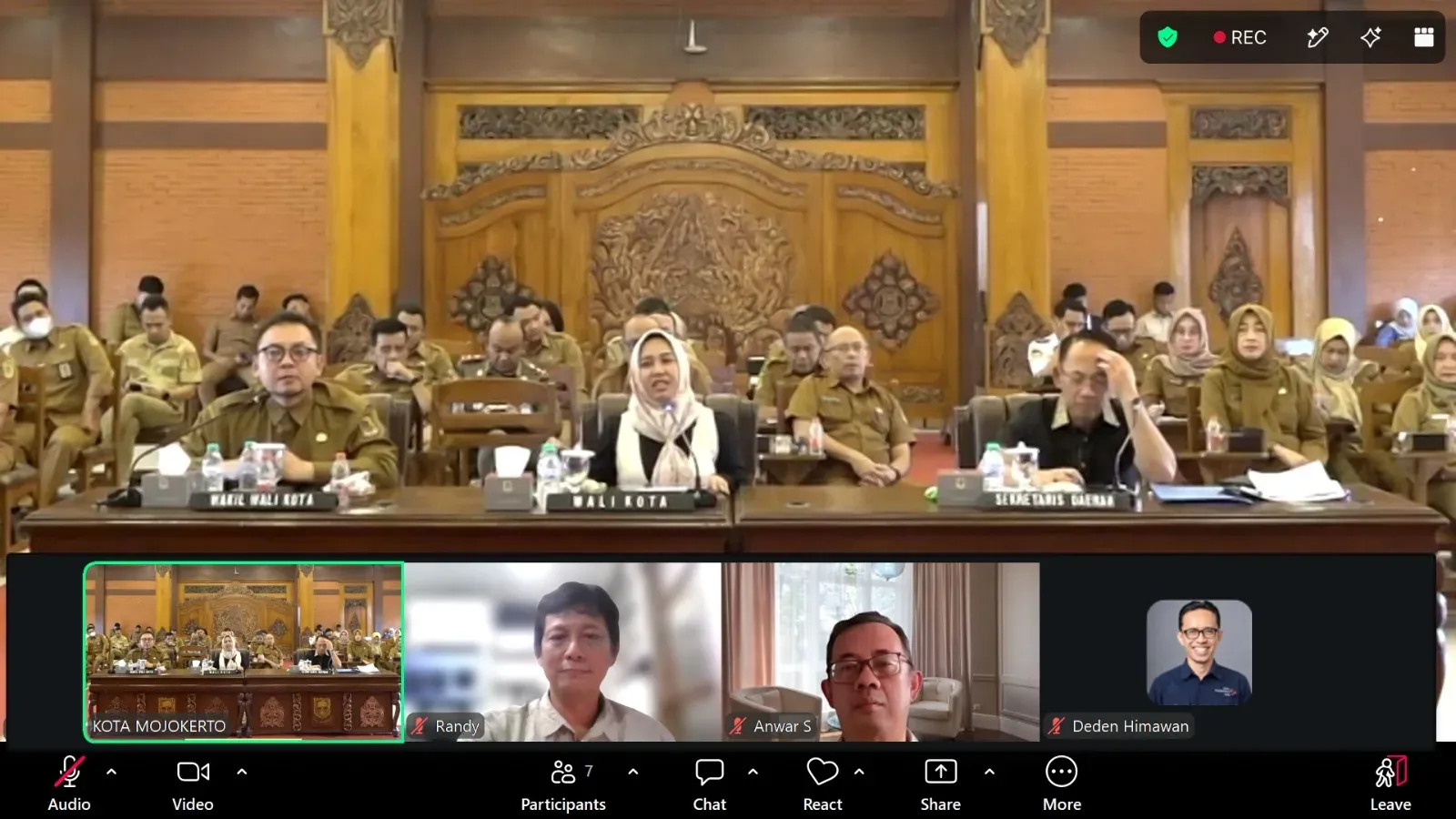
Mojokerto, 15 September 2026 — The Mojokerto regency government (Pemkab Mojokerto) and Tech Mayantara Asia (TMA) again opened a space for strategic collaboration to drive digital transformation in regional government. In a meeting that lasted about one hour, officials of the Mojokerto regency government and the TMA team discussed the architecture design of the Intelligent Decision Support System (IDSS), aimed at helping the regional government manage data, monitor development performance, run analysis, and support more measurable decision-making.
The meeting was attended directly by the Mayor of Mojokerto, the Deputy Mayor, the Regional Secretary, and representatives of various regional government organisations (OPD). From TMA, Randy R. Wrihatnolo, Anwar, and the technical team presented the concept, mechanism, benefits, and early stages of IDSS development to support governance in Mojokerto regency.
One important point discussed was how TeMA Civic, one of TMA's platforms for government and public service needs, can become the first foundation for building the Mojokerto IDSS ecosystem. With that approach, IDSS does not have to be built from zero. It can be developed on a prepared platform foundation, then extended with data integration, analytics, performance indicators, and decision support intelligence.
This concept places TeMA Civic as an early layer or digital foundation for IDSS development. TeMA Civic acts as the platform where various digital government needs can be built and integrated, while IDSS is developed further to bring intelligence capability on top of that government data and those processes.
That approach matters because the challenge for regional governments today is not only how to provide digital applications. Many OPDs already have their own applications and systems, but the data they produce is often still scattered, in different formats, and not yet easy to use for cross-sector analysis. As a result, information that is actually very valuable cannot fully serve as a basis for decisions.
Through the concept of TeMA Civic → Data Integration → Analytics → IDSS, TMA offers a staged approach to building that ecosystem. TeMA Civic is the foundation for government applications and services, while the integration layer lets data from various sources and OPDs be consolidated. Integrated data can then be analysed to produce insight, before finally being presented through the IDSS mechanism as information that helps leaders set policy direction.
In his presentation, Randy R. Wrihatnolo explained that the Mojokerto IDSS is designed on modular and scalable principles. The system can start from priority needs and grow in stages following data readiness, applications, and the regional government's needs. This approach also allows technology investment to be more measured, because development does not have to happen all at once at a large scale.
The IDSS design also does not stop at the dashboard concept. A dashboard is only one part of the system. Behind it are processes to integrate various data sources, process and validate data, analytics, performance indicators, and mechanisms to produce information that helps decision-making.
In the Mojokerto context, IDSS is aimed at supporting evaluation of the nine main indicators of regency governance. These indicators can later be one framework for connecting sectoral data from various OPDs, so regional leaders can see development conditions more fully, not only from one sector's data.
The Regional Secretary in the discussion also stressed the importance of uniting data from all OPDs. Integration is needed to reduce potential duplication and inconsistency of data, and to give a stronger basis for budget planning, target setting, and evaluation of development programs.
Meanwhile Anwar highlighted that the benefit of IDSS is not only about technology efficiency. More than that, the system is expected to push a change in government work culture toward data-driven government. When data is more integrated and can be analysed well, leaders and OPDs have a more objective basis to set priorities, allocate resources, and evaluate program results.
In that framework, TeMA Civic's presence is strategic. This platform can be the starting point for standardising government digital processes and for providing the foundation to develop more advanced capabilities. As data sources and analytical needs grow, IDSS capability can be developed without changing the whole system foundation.
The early roadmap discussed together covered an assessment of existing applications, mapping of data sources, data integration, dashboard and indicator development to fit Pemkab Mojokerto's needs, analytical capability development, human resources training, and continuous evaluation and improvement. All these stages will run through a collaborative approach between TMA and the regional government.
The Mojokerto IDSS concept is therefore not positioned as a product that stands alone. IDSS is an intelligence layer that grows on top of the government digital ecosystem, with TeMA Civic as one of its first foundations. This approach allows transformation to happen in stages: starting with digital services and processes, integrating data, presenting dashboards, then raising system capability toward analytics and decision support.
The meeting closed with a commitment to continue the discussion and prepare the next implementation steps. For TMA, this collaboration with Pemkab Mojokerto is a chance to apply the “Technology with True Humanity” philosophy in a government context: technology is not just about presenting an application, but about helping people understand situations better and make decisions that bring real benefit to the community.
Through TeMA Civic as the first foundation and IDSS as the intelligence layer, TMA and Pemkab Mojokerto have started designing a digital ecosystem expected to bring government governance toward a direction that is more integrated, adaptive, transparent, and data-based.