Company
TMA attends Telkom University Computing Project Exhibition 2026: strengthening industry and academic synergy to create digital innovation
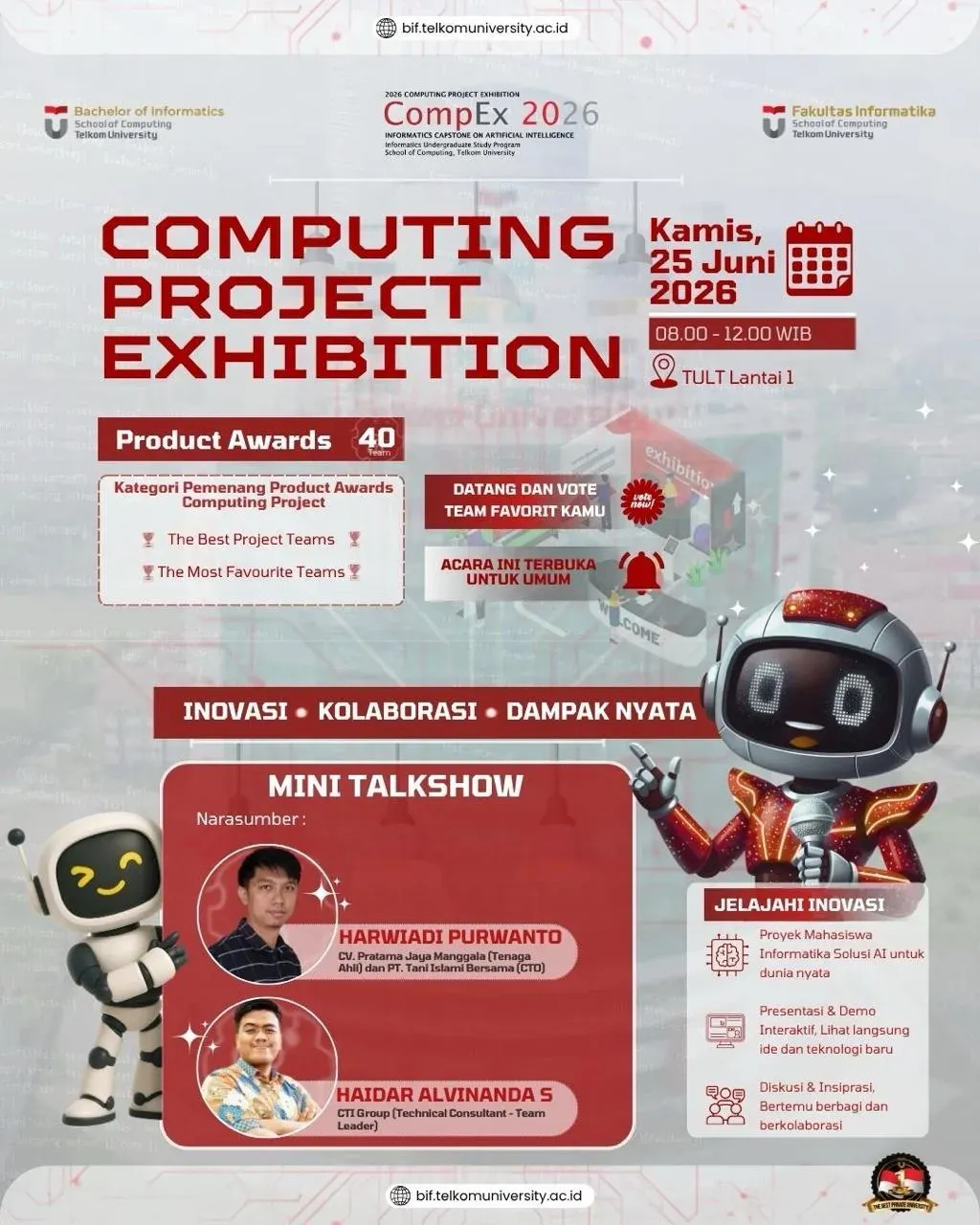
Computing Project Exhibition is one of Telkom University's yearly academic agendas that brings education and industry together. At this event, 40 student teams presented their best digital products to lecturers, industry practitioners, mentors, and the judging panel. All projects were presented directly through demo sessions, technical discussion, and product evaluation, so participants got complete feedback from different perspectives.
27 June 2026
Notes from the work
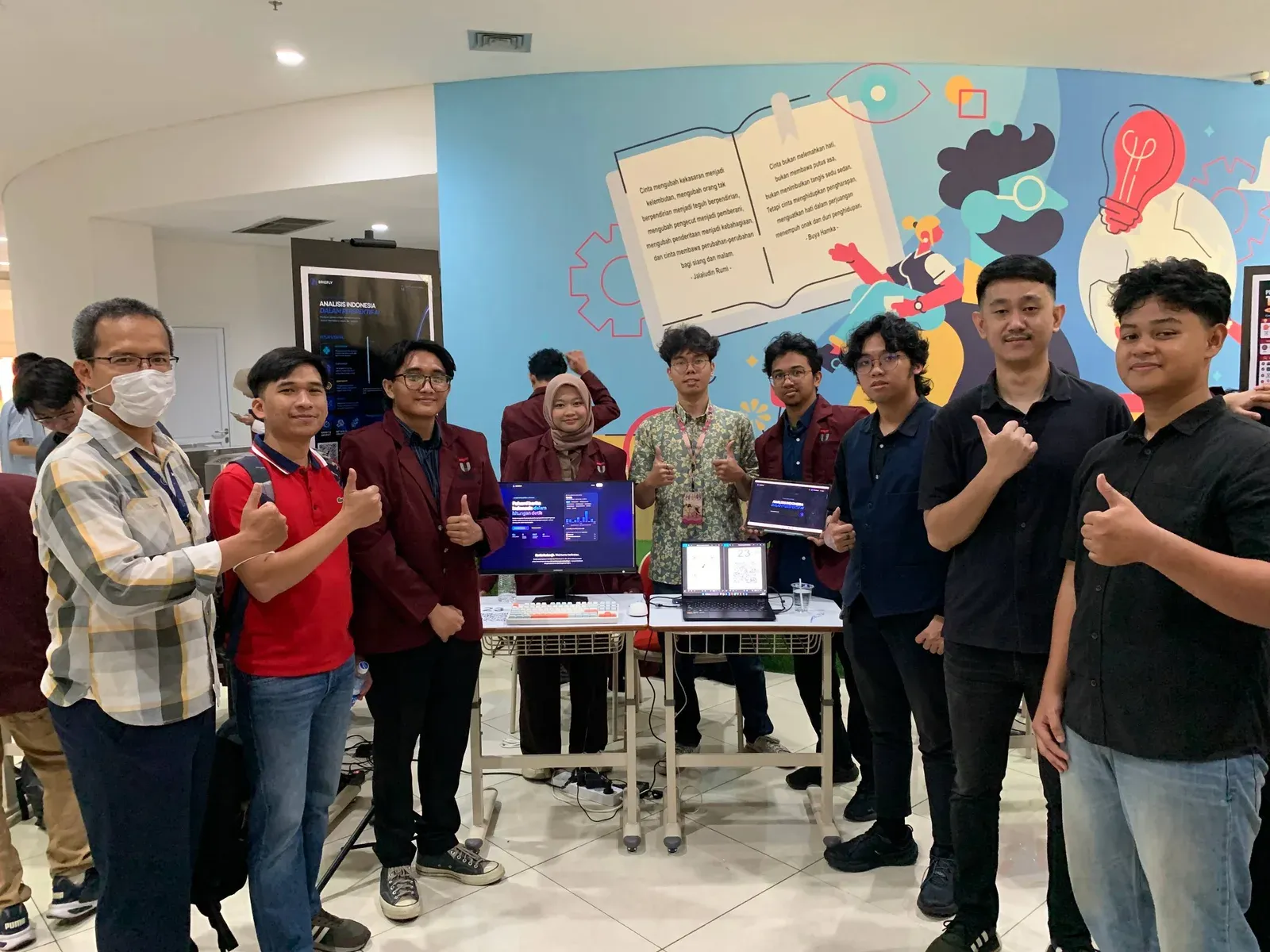
On Thursday, 25 June 2026, PT Tech Mayantara Asia (TMA) again showed its commitment to supporting Indonesian digital talent development by taking part in the Computing Project Exhibition 2026, held by the Faculty of Informatics at Telkom University. The event, which ran from 08.00 to 12.00 WIB on floor 1 of the Faculty of Informatics building at Telkom University, was an exhibition and assessment of innovative student work developed during their studies.
Computing Project Exhibition is one of Telkom University's yearly academic agendas that brings education and industry together. At this event, 40 student teams presented their best digital products to lecturers, industry practitioners, mentors, and the judging panel. All projects were presented directly through demo sessions, technical discussion, and product evaluation, so participants got complete feedback from different perspectives.
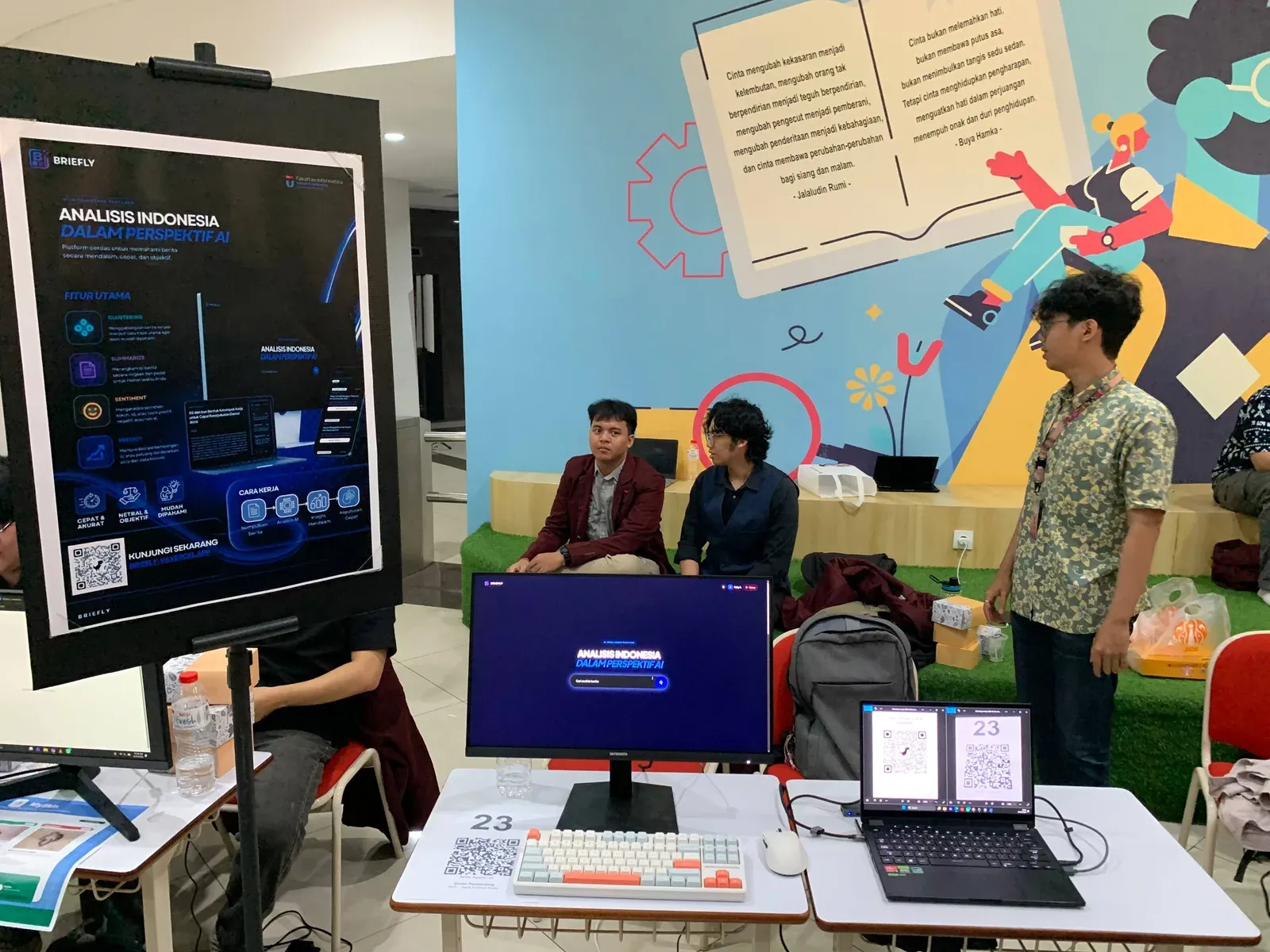
For TMA, taking part was more than answering an invitation as an industry guest. The event was a real form of the company's commitment to building an ecosystem of collaboration between academia and the technology industry. Over the past few months, TMA acted as an industry partner giving mentoring to one of the participating teams that developed Briefly, an Artificial Intelligence-based platform designed to analyze digital news, produce automatic summaries, run sentiment analysis, and predict impact on different industry sectors.
Through that mentoring, TMA gave input on improving system architecture, product development approach, user needs validation, and a technology implementation view closer to industry needs. The mentoring is expected to bridge the theory students learn in class with the real challenges they will face when they enter the professional world.
To represent the company, TMA sent three people who have been active in student coaching and company product development: Salman Artadi, Randy Rahman, and Faisal Tahir. All three came as TMA representatives and as industry mentors who followed the student projects from the early stage to the final presentation.
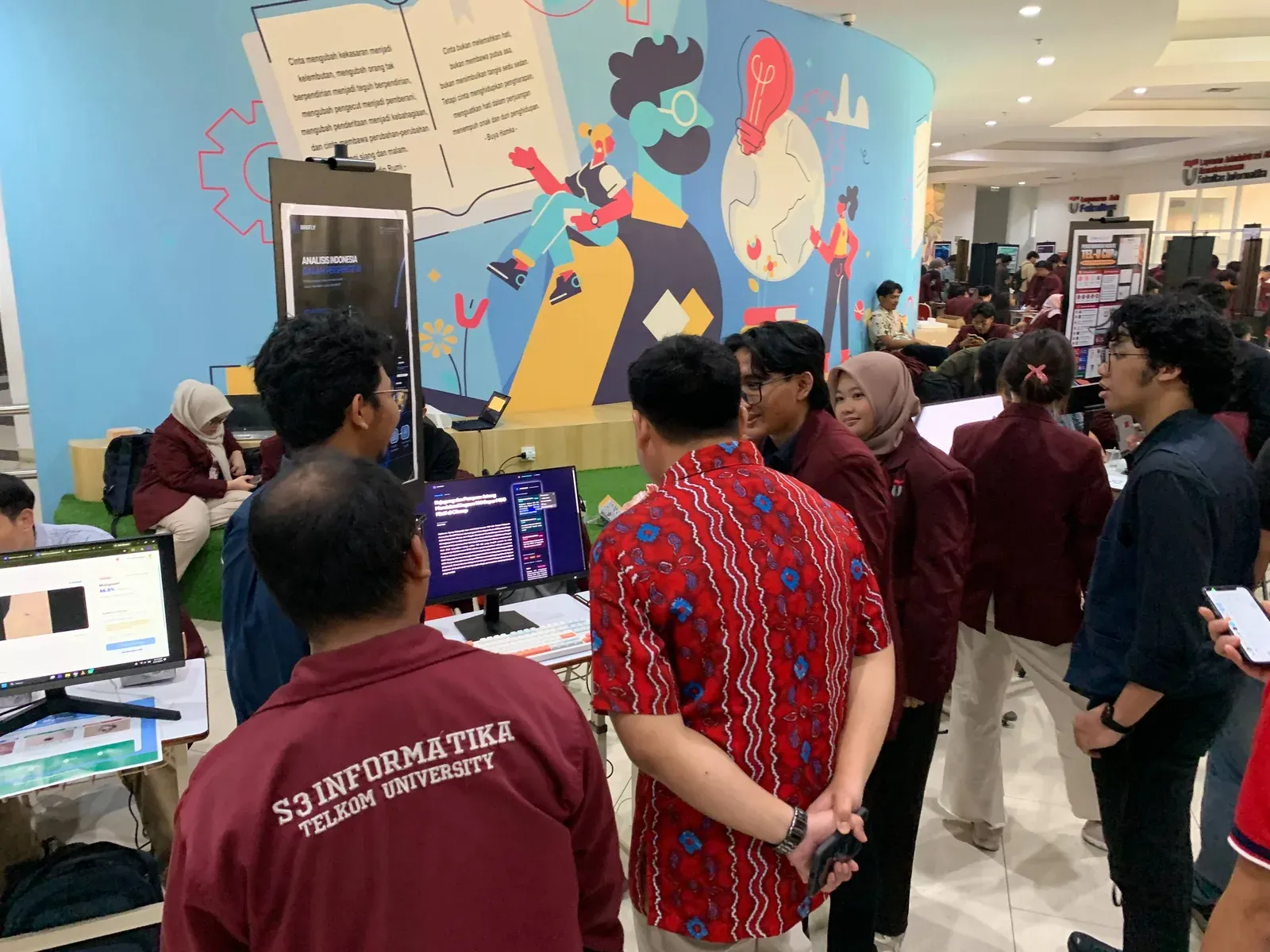
Students welcomed the TMA mentors with enthusiasm. During the exhibition, they walked around the participant booths to see the solutions directly. The TMA team appreciated the student work and also discussed technical aspects: application architecture, user experience, the use of artificial intelligence, deployment strategy, and the chance to develop products into solutions truly ready for industry use.
One project that got special attention was Briefly, the product that received TMA mentoring during its development. The platform is designed to help users deal with information overload through Artificial Intelligence technology that can aggregate news, group topics, run sentiment analysis, summarize automatically, and identify impact on certain sectors. The product shows how students can combine modern technology such as Natural Language Processing (NLP), Large Language Models (LLM), machine learning, and web engineering into a solution with practical value.
According to the TMA mentor team, one main strength of Briefly is that it connects an engineering approach with an understanding of user needs. The student team did not only focus on the technology. They also tried to understand how a product can give real benefit in helping analysts, researchers, media, and policy makers get information faster and in a more structured way.
TMA's attention was not limited to one project. During the event, the team also watched other innovations on display. The different digital solutions showed the high creativity of Telkom University students in answering challenges in education, health, business, information security, and the use of Artificial Intelligence for many public needs.
For TMA, events such as Computing Project Exhibition have great strategic value. The technology world changes very fast, so a company cannot move alone without support from education. Universities also need input from industry so their teaching material stays relevant to real needs in the field. This collaboration is believed to produce graduates who are strong academically and ready to contribute professionally from their first day at work.
In line with the company philosophy, TMA believes learning does not stop when someone graduates. The culture of being a learning person is one value the company keeps developing, inside the company and through collaboration programs with education institutions. Student mentoring, internship, field work practice, joint research, and knowledge-sharing activities are part of that commitment.
The presence of Salman Artadi, Randy Rahman, and Faisal Tahir at Computing Project Exhibition also shows how engineers at TMA are not only technology developers but also guides and facilitators for the younger generation. Through direct interaction with students, real project implementation experience can be shared, so participants get a wider view of how a solution is developed from the idea stage until it is ready for users.
Besides strengthening the relationship with Telkom University, the event also opened chances for wider collaboration. The discussions during the exhibition showed much potential for applied research, joint product development, and innovation incubation that academia and industry can carry out together over the long term.
Seeing the enthusiasm of participants and the quality of the projects presented, TMA is confident that Indonesia has very strong young human resources to drive national digital transformation. What is needed is healthy collaboration space, room to experiment, and mentoring from industry practitioners, so the innovation that appears does not stop as an academic assignment but grows into a solution that brings real impact to society.
TMA's participation in Computing Project Exhibition 2026 is clear proof that synergy between universities and industry is not just a slogan. It is a long-term investment in building Indonesia's technology ecosystem. When academics produce fresh ideas and industry brings real implementation experience, the result is innovation that is technically strong and relevant to market needs.
Through collaboration like this, TMA hopes the relationship with Telkom University will keep growing. Together, academia and industry can create a more applied learning environment, speed up the birth of quality digital talent, and deliver technology solutions that bring real benefit to businesses, government, and Indonesian society.